

Before It Was Named
Living inside change before meaning catches up


There are periods in life that feel unstable, not because something is wrong, but because something is unfinished.
From the inside, they are experienced as acceleration, tension, and uncertainty. Familiar markers stop working. Old language loses its grip. New meaning has not yet formed.
We tend to judge these moments harshly, assuming confusion signals decline. But history suggests something else is often happening.
Some of the most consequential eras were lived without knowing what they would later be called.
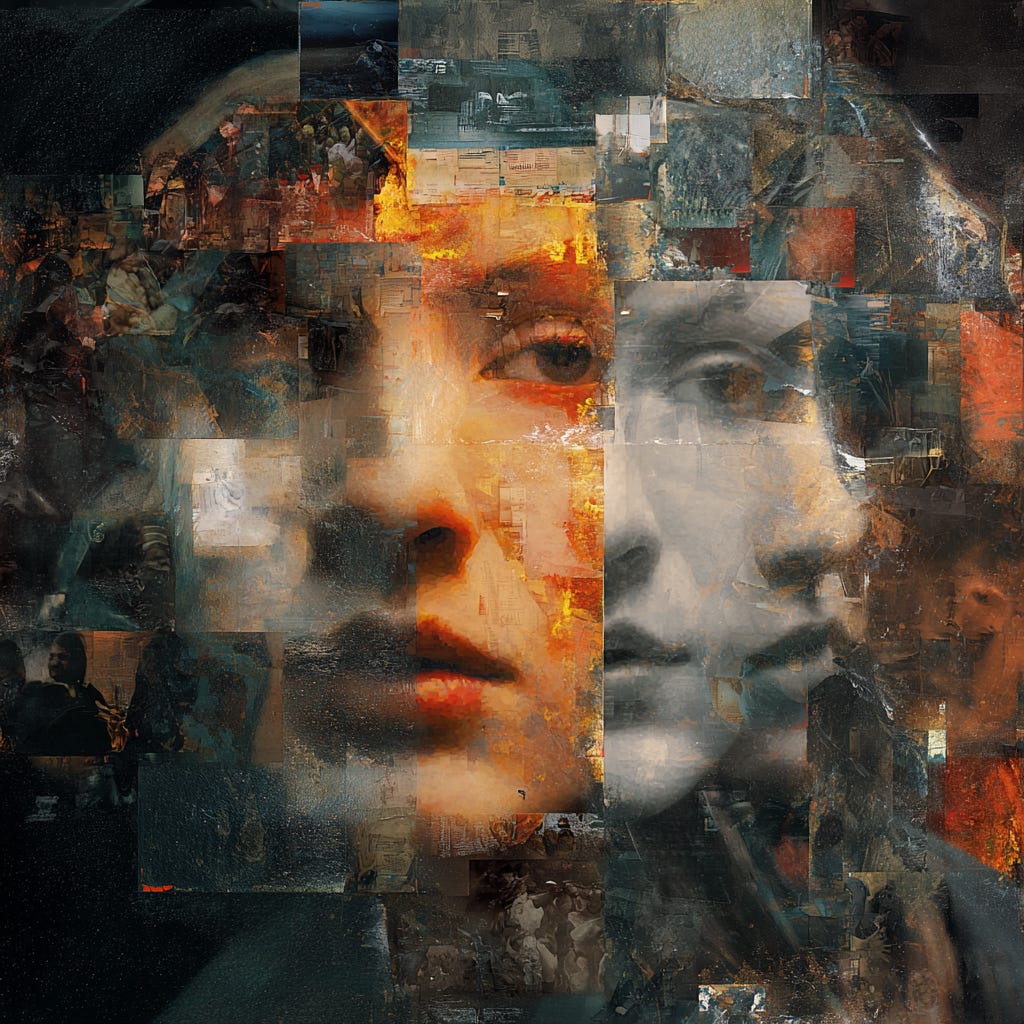
NOW
When the era hasn’t announced itself yet.
There are moments that feel like decline only because they haven’t been named.
From the inside, they feel unstable.
Noisy. Accelerated. Uncertain.
From the outside. Later. They are often called something else entirely.
A flourishing.
A turning.
A beginning.
The mistake we make is assuming that meaning is supposed to be legible while we’re living it.
Most eras aren’t experienced as beautiful.
They’re experienced as confusing.
This is what it feels like to live before the label arrives.

NEW
Why we misread the moment we’re in
History has a pattern we rarely notice.
Periods that later become known for creativity, expansion, and cultural shift were not recognized as such at the time. They were lived as tension.
Old structures were still standing, but losing authority.
New ideas were forming, but not yet trusted.
People sensed movement without understanding its direction.
From inside those moments, it didn’t feel like a golden age.
It felt like instability.
We often confuse “I don’t recognize this yet” with “this is wrong.”
But unfamiliarity is not evidence of failure.
It’s evidence that language hasn’t caught up to experience.
Meaning is almost always retroactive.

NEXT
Staying present before the story hardens
There is a temptation, especially now, to rush toward conclusions.
To label the moment too quickly.
To decide whether this is progress or decline.
To force a story onto something that is still forming.
But some periods ask for a different posture.
Not optimism.
Not pessimism.
Attention.
The ability to stand inside change without demanding it explain itself yet.
If this moment feels unsettled, that doesn’t mean it lacks significance.
It may simply mean you’re living it from the inside.
Some eras only become beautiful once we’ve survived them.
Others are shaping us precisely because we don’t yet know what to call them.
Being here doesn’t require certainty.
Only the willingness to notice what’s emerging before it’s named.

I’m Tobin Trevarthen.
I work with people and companies who sense that something in their story is no longer aligned, even though things appear to be working.
My work is not about reinvention or performance. It is about orientation. Helping people locate where they are inside change before deciding what comes next.
ShiftStory™ is the container for that work. A disciplined, human way of noticing when familiar narratives no longer quite fit.
I’m less interested in scale than in accuracy. Less interested in telling people who they could become than in helping them hear what’s already true.
If something here resonates with you, you don’t need to agree with it. You only need to notice it.
That’s usually enough to know whether a conversation would be useful.