

Crew vs. Tribe
The difference between belonging and being accountable


For years, we’ve been told to “find our tribe.”
People who see us.
People who share our beliefs.
People who make us feel like we belong.
But somewhere along the way, we confused belonging with readiness.
Because there’s another construct that rarely gets talked about outside of high-stakes environments.
Crew.
A crew is not about shared identity. It’s about shared responsibility.
You don’t join a crew because you fit. You’re chosen, or you choose, because you can be counted on.
A tribe is formed through gravitational pull.
Shared values. Shared language. Shared worldview.
A crew is formed through situational necessity.
Clear roles. Defined stakes. Mutual dependence.
A tribe asks: Do I feel seen here?
A crew asks: Can I trust you when it matters?
A tribe expands.
A crew sharpens.
A tribe can exist indefinitely.
A crew exists because something is at stake.
And here’s the uncomfortable part:
Most people spend their lives optimizing for tribe.
Very few deliberately step into crew.

NOW: Under real pressure
You may be surrounded by people who understand you.
Who support you. Who share your lens.
But when pressure enters the room, something shifts.
In a cockpit at 3,000 feet after an engine failure, nobody cares who feels understood. They care who flies the aircraft. Who calls the checklist. Who speaks up when something is missed.
In an ICU, when a patient starts to crash, the room reorganizes instantly. Not around personalities. Around roles. Airway. Medication. Monitoring. Callouts.
No debate. No drift. No ambiguity.
The same thing happens in your world. Just with different stakes. And less acknowledgment.
You start to see who can hold weight.
Who disappears. Who over-functions. Who steadies the system.
The illusion breaks.
Not everyone in your tribe is built for your crew. That’s not judgment. It’s structure.
If you can’t name who does what when things go sideways, you don’t have a crew.
You have proximity.
NEW: Reframing the questions
What if you stopped asking, “Where do I belong?” And started asking, “Who do I trust under pressure?”
Think like a mission planner.
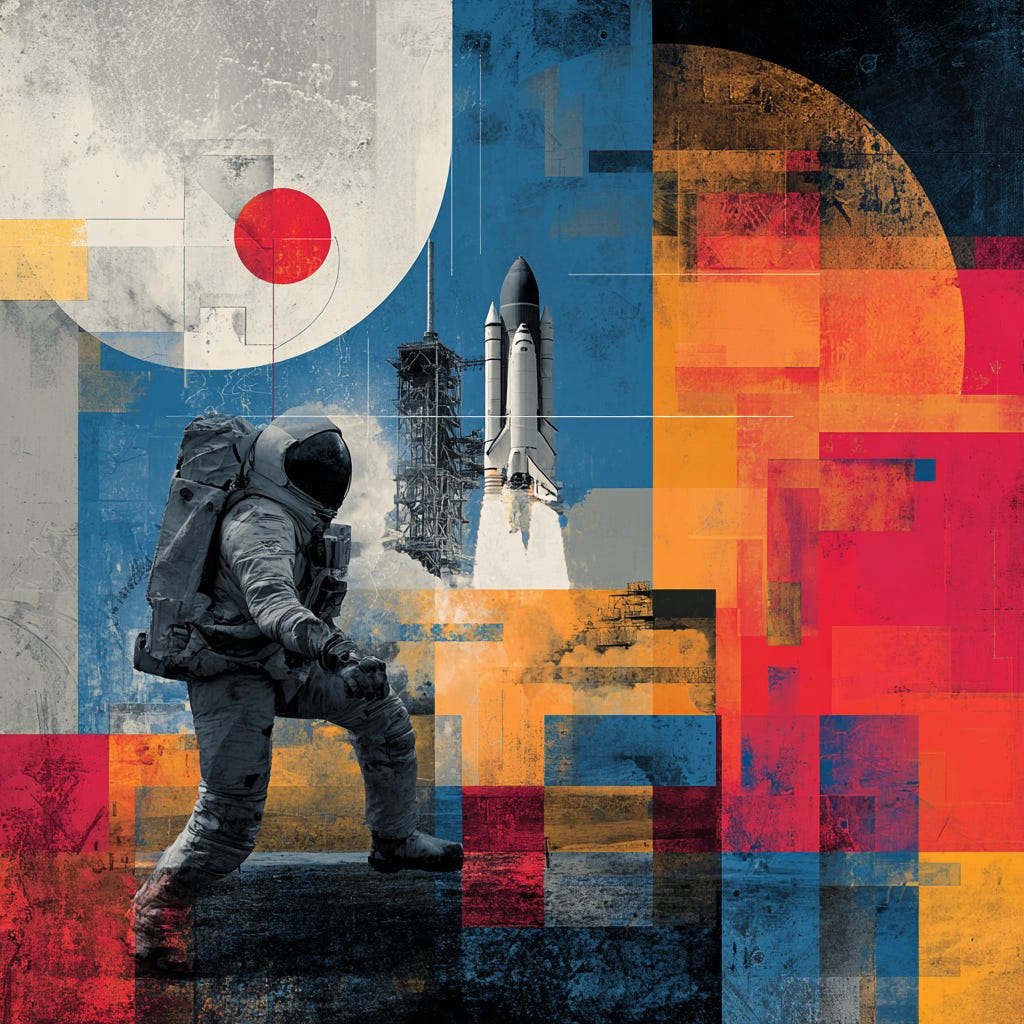
Before a launch, organizations like NASA don’t ask who connects best. They ask who can operate when there is no margin for error.
Who stays clear when something breaks. Who communicates without ego.
Who absorbs pressure instead of amplifying it.
Not chemistry. Capability.
What if you looked at your circle through that lens?
Who runs toward the problem. Who can disagree without destabilizing trust.
Who tells you the truth before it’s safe.
And then the harder turn:
Where are you still showing up as a tribe member when the moment is asking you to be crew?
Signaling alignment. Avoiding commitment. Offering support without owning outcome.
These are not subtle differences.
A tribe lets you be seen. A crew requires you to be counted on.

NEXT: Designing for consequence
I see a world where we stop confusing connection with readiness.
Where tribes still matter. Identity. Meaning. Shared language.
But crews are built differently.
Chosen with intention. Defined by role. Tested under pressure.
Where founders don’t just build teams they like. They build teams they would trust when things break.
Where leaders don’t just talk about culture. They define what reliability actually looks like when the system is stressed.
Where people stop optimizing for alignment and start preparing for consequence.
Because the life you’re moving toward will not be navigated by tribe alone.
At some point, the room changes.
The conversation tightens. The stakes become real. The margin disappears.
And in that moment, there is no tribe.
Only crew.
And the only question left is not whether you belong.
It’s whether you can be trusted.

I’m Tobin Trevarthen.
I’ve spent the first 30 years inside the companies doing the work, building my Narrative Equity from a horizontal lens. I spent the last 12 years working across companies and executives to find the story that holds — only to discover, somewhere along the way, that the deeper work was always about something else.
We are not linear, chronological beings. We are spatial. Cumulative. Mosaic.
Every encounter adds a tile. Every shift — in role, in identity, in what the world asks of you — changes the image. The meaning only becomes visible when you step far enough back to see the whole.
I call that holistic view a Living Mosaic. And the value it accumulates over time — through clarity, coherence, and conscious design — is what I refer to as Narrative Worth™.
Today, I work with founders and executives at the moments when the old story no longer holds, and the new one hasn’t formed yet. That inflection point is where I live. My perspective represents a lived experience.
This includes neurodivergent executives whose minds were never meant to fit the standard frame — and whose most extraordinary tiles often go unseen for exactly that reason.
Helping them build the mosaic that finally holds all of who they are is some of the most important work I do.
ShiftStory™ is where we do that work together.
I would be honored to help you shift your story. Your Narrative Worth™ is the most valuable asset you will ever own.